The Quantum Threat: Why Action Must Begin Now
Current public-key cryptographic algorithms, including RSA, ECC, and Diffie–Hellman, rely on mathematical problems that are difficult for classical computers to solve. Future quantum computers could overcome these challenges, potentially compromising existing encryption and digital security systems. The threat of “harvest now, decrypt later” makes early preparation essential, as attackers may collect encrypted data today to decrypt it when quantum technology advances.
Organizations should start preparing for Post-Quantum Cryptography (PQC) by identifying vulnerable cryptographic systems, prioritizing sensitive and long-term data, and planning a phased transition to hybrid cryptographic environments. This includes adopting NIST-standardized PQC algorithms such as ML-KEM, ML-DSA, and SLH-DSA to strengthen security against emerging quantum threats.
Learn more about today's top security risks in the 2026 Thales Data Threat Report: Quantum & AI Trends
Building a Future-Proof Post-Quantum Strategy
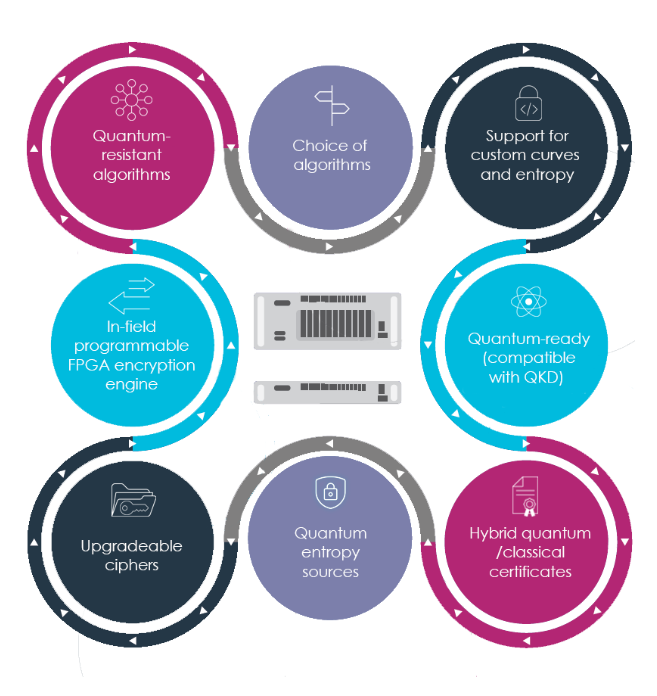
Securing an enterprise against quantum threats requires cybersecurity solutions that support Quantum Resistant Algorithms (QRA), and also offer options for Quantum Key Distribution (QKD) and Quantum Random Number Generation (QRNG). Thales is committed to delivering solutions that support a Post-Quantum crypto agile strategy.